Deputy CEO & CTO at Liberalia Assistance, part of the Anovo group
Leading business and technology. Connecting strategy with execution.
I bring together executive leadership, hands-on technical expertise and experience in the international electronics trade to improve operations, build cohesive teams and create new business opportunities.
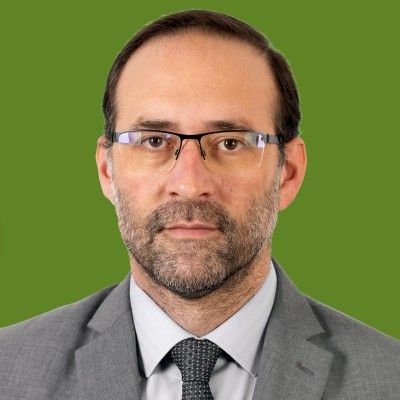
Business perspective. Technical depth.
I am Deputy CEO & CTO at Liberalia Assistance, a third-party administrator that handles electronic-device claims for insurers, combining advanced repair, logistics and proprietary software. Liberalia joined the Anovo group in 2026.
I run the company's day-to-day operations alongside the CEO, Jan Farrell, with direct responsibility for software, technology infrastructure, repairs and purchasing. My job is to build an organisation that works: clear priorities, cohesive teams pulling in the same direction, and decisions that are carried through to execution.
My background spans business and engineering: twelve years as an entrepreneur in Córdoba and more than twenty-five in technology. I understand the business challenges and the technology and processes needed to address them. When needed, I work directly on software, infrastructure and device repairs.
- Role
- Deputy CEO & CTO
- Company
- Liberalia Assistance, Anovo group
- Responsible for
- Software, infrastructure, repairs and purchasing
- Based in
- San Sebastián de los Reyes, Madrid
Four areas. One integrated perspective.
Four responsibilities that are usually spread across several people. Connecting them shortens the path from decision to result and gives the teams a single, shared view.
-
Executive leadership and teams
I help shape Liberalia's strategy and, alongside the CEO, turn it into day-to-day operations: clear priorities, responsibilities and decisions for every department. I pay close attention to team cohesion and constantly review processes to make them leaner, less costly and more productive. Liberalia works with insurers such as Caser, MAPFRE, Occident, Santalucía, Helvetia and Insurama, and with telecoms operators and retailers such as El Corte Inglés, Grupo MASMOVIL and Orange.
-
Technology and artificial intelligence
I lead software development and infrastructure, and I still write code and configure systems when it adds value. In AI, I know the models and what they can genuinely do: I evaluate open and locally hosted LLMs, prepare data and explore LoRA fine-tuning, with reliability, control over outputs, cost and privacy as the guiding criteria. The company's AI assistant, which will support our teams and power our chatbot and voicebot, is in development.
-
Operations and communications
A claims administrator runs on its phones, its CRM and its processes. I integrate IP telephony (Asterisk, FreePBX, Mitel) with our own call-centre, CRM and ERP software, and connect them to logistics, purchasing and repairs so that every team works from the same information. The repair lab and the purchasing department report to me; in the lab, I help develop new repair and micro-soldering techniques.
-
International electronics trading
I buy and sell bulk lots of electronic devices in B2B markets, with particular experience importing from China and selling across Europe. I assess each lot technically and commercially, negotiate and see the deal through. That market knowledge ties directly into repair and refurbishment: knowing what a device is worth, what it costs to bring it back into service and where it can find a second life.
The system behind every claim
This is how the systems we run at Liberalia, most of them built in-house, fit together. A pulse follows the path of a claim; each node explains what it is and my role in it.
The pulse follows the path of a claim.
Select a node to see what it is and my role in it.
Insurers
Insurers such as Caser, MAPFRE, Occident, Santalucía, Helvetia and Insurama, and telecoms operators and retailers such as El Corte Inglés, Grupo MASMOVIL and Orange, entrust their claims to Liberalia. Their systems are integrated with our CRM and ERP.
Policyholder
Receives the device, repaired or replaced.
IP PBX
Receives and routes calls from policyholders and insurers.
- Technology
- Asterisk and FreePBX
- My role
- I led its rollout and integration with the call-centre software.
Call-centre software
Guides each customer interaction: identifies the policy, opens the case file and logs every contact.
- Technology
- Built in-house
- My role
- I lead its in-house development and contribute to the code.
CRM and ERP
The core: case files, policies, devices, repairs, purchases and KPIs, integrated with the systems of the insurers we work with.
- Technology
- Built in-house, from scratch
- My role
- I lead its development and contribute to the code. I built the integration with the insurers myself.
Repair lab
Diagnoses and repairs the device; every spare part is linked to the case file.
- Technology
- Advanced repair and micro-soldering
- My role
- I run the repair lab and help develop diagnostic and micro-soldering techniques.
Purchasing and spare parts
Links every purchase to its case file, tracks spare-part stock and forecasts purchasing needs.
- Technology
- In-house software connected to the CRM
- My role
- I run the purchasing department and lead the development of its software.
Logistics
Books pickups and shipments straight from the case file, in a couple of clicks.
- Technology
- Integration with courier companies
- My role
- I designed the integration: what used to take several minutes per shipment now takes a couple of clicks.
Quality
Checks every repair before it goes out and monitors the quality of customer service and of the parts and devices we buy.
- Technology
- Quality checks and real-time KPIs in the CRM
- My role
- I set the quality controls and criteria that connect repairs, customer service and purchasing. Service excellence is the priority.
LLM assistant
In development
Will look up procedures and prepare case information for our teams, and power the customer-service chatbot and voicebot.
- Technology
- Open and local models
- My role
- In development: I prepare data, evaluate open and locally hosted models and explore LoRA fine-tuning. Not yet in production.
Select a node to see what it is and my role in it.
-
Insurers such as Caser, MAPFRE, Occident, Santalucía, Helvetia and Insurama, and telecoms operators and retailers such as El Corte Inglés, Grupo MASMOVIL and Orange, entrust their claims to Liberalia. Their systems are integrated with our CRM and ERP.
-
Receives and routes calls from policyholders and insurers.
My role
I led its rollout and integration with the call-centre software.
-
Guides each customer interaction: identifies the policy, opens the case file and logs every contact.
My role
I lead its in-house development and contribute to the code.
-
The core: case files, policies, devices, repairs, purchases and KPIs, integrated with the systems of the insurers we work with.
My role
I lead its development and contribute to the code. I built the integration with the insurers myself.
-
Diagnoses and repairs the device; every spare part is linked to the case file.
My role
I run the repair lab and help develop diagnostic and micro-soldering techniques.
-
Links every purchase to its case file, tracks spare-part stock and forecasts purchasing needs.
My role
I run the purchasing department and lead the development of its software.
-
Books pickups and shipments straight from the case file, in a couple of clicks.
My role
I designed the integration: what used to take several minutes per shipment now takes a couple of clicks.
-
Checks every repair before it goes out and monitors the quality of customer service and of the parts and devices we buy.
My role
I set the quality controls and criteria that connect repairs, customer service and purchasing. Service excellence is the priority.
-
Will look up procedures and prepare case information for our teams, and power the customer-service chatbot and voicebot.
My role
In development: I prepare data, evaluate open and locally hosted models and explore LoRA fine-tuning. Not yet in production.
-
Receives the device, repaired or replaced.
Experience that shows in day-to-day operations.
Four decisions and what changed as a result.
-
Software built around the business
- Problem
- Customer service, claims, repairs and purchasing were working from scattered information, and insurers needed to exchange it with us.
- Decision
- Build our own CRM, ERP and call-centre software from scratch rather than adapt an off-the-shelf product.
- What I did
- I lead the development, contribute to the programming and built the integration with the insurers' systems.
- Outcome
- A single platform for the whole operation, integrated with the insurers and continuously evolving.
-
Logistics built into the case file
- Problem
- Every pickup or shipment took several minutes of manual work in the courier companies' own tools.
- Decision
- Connect the CRM directly to the couriers.
- What I did
- I designed and implemented the integration.
- Outcome
- Pickups and shipments in a couple of clicks from the case file itself, staff freed up for higher-value work, lower operating costs and better service.
-
Purchasing with traceability and forecasting
- Problem
- Spare parts were not linked to case files, and purchases were made without a reliable forecast, risking overstock.
- Decision
- Develop purchasing software connected to the CRM.
- What I did
- I led its development and rollout across the department.
- Outcome
- Every purchase tied to its case file, full tracking of spare parts, insight into repair operations and more accurate forecasts, supporting better purchasing decisions and stock control.
-
Unified communications across three buildings
- Problem
- Córdoba's municipal planning agency ran analogue telephony across three buildings, with hundreds of extensions and direct-dial numbers.
- Decision
- Migrate to a Mitel IP PBX, after first analysing all existing communications.
- What I did
- I led the analysis and the migration in 2011, as a project delivered by my company SatExpres.
- Outcome
- Hundreds of extensions and all inbound and outbound numbers unified in a single system.
Twelve years as an entrepreneur in Córdoba, and at Liberalia since 2013.
| Years | |
|---|---|
| University of Córdoba, Industrial Engineering – Industrial Electronics | 1998–2003 |
| PcPhone 2001, CEO and CTO | 2001–2013 |
| SatExpres Córdoba, CEO and CTO | 2001–2013 |
| Luz Superled, CEO and R&D | 2011–2013 |
| Aplicaled, CEO and CTO | 2012–2013 |
| Liberalia Assistance, CTO | 2013–today |
| Liberalia Assistance, Deputy CEO & CTO | 2019–today |
More than twenty-five years across technology and business.
-
2001–2013
Entrepreneur in Córdoba
I founded and ran telephony, repair and import businesses: PcPhone, SatExpres, Luz Superled and Aplicaled. Through SatExpres I also took on public-sector projects, including migrating Córdoba's municipal planning agency to IP telephony in 2011.
-
2013
CTO at Liberalia Assistance
I joined to lead technology: the repair lab, quality, purchasing and imports, and the company's digitalisation.
-
2019
Deputy CEO & CTO
I also took on day-to-day operational leadership alongside the CEO, while keeping responsibility for technology, repairs and purchasing.
-
2026
Liberalia joins the Anovo group
A new chapter for the company within the Anovo group. I continue to lead operations, technology, repairs and purchasing.
Education
University of Córdoba, Industrial Engineering – Industrial Electronics (1998–2003). Insurance intermediary qualification: group B university course (Nebrija University, 2021) and level 1 certification (CECAS insurance school, 2022). Courses: The Hardware/Software Interface (University of Washington, 2014), Python programming (Coursera, 2014), Android applications (Camilo José Cela University, 2012) and foreign trade (Córdoba Chamber of Commerce).
A simple method, the same for a technical fault as for a business decision.
-
Observe
Look at the problem where it happens.
-
Gather information
Collect the data and the context before forming a view.
-
Analyse
Separate causes from symptoms.
-
Draw conclusions
Decide on the information available and explain the reasoning.
-
Check the solution
Test it before calling it done.
-
Implement the solution
Roll it out and measure the impact.
No solution is final.
Let's talk.
If you would like to exchange ideas about technology and business, explore a collaboration or discuss a project, get in touch.
Message me on LinkedInI reply personally.